
Slab Leaks in Irvine Tract Homes: Early Signs and What to Do
A slab leak is a leak in a water line running beneath your home's concrete foundation. In Irvine's slab-on-grade tract homes, the early signs are a sudden water-bill spike, warm spots on the floor, the sound of running water when everything is off, dropping water pressure, and unexplained damp or cracked flooring.
What Is a Slab Leak — and Why Irvine Homes Are Prone to Them
Many homes in Southern California are built using "slab-on-grade" construction. This means there is no basement or crawlspace; the home sits directly on a concrete foundation, and the main water lines are routed through or directly underneath that concrete slab.
Irvine's tract homes, built largely by the Irvine Company from the 1960s onward, were constructed using copper water lines embedded in these slabs. While copper is durable, it is not invincible. Local risk factors make these homes particularly vulnerable to slab leaks. High municipal water pressure in hillside neighborhoods places constant stress on pipe joints. Furthermore, Orange County's hard water accelerates corrosion inside the pipes, and natural soil movement or settling can cause the rigid concrete to shift, putting immense pressure on the lines within.
Early Warning Signs of a Slab Leak
Because the pipes are buried under concrete, you won't see a dripping pipe. Instead, look for these secondary indicators:
- Unexplained spike in the water bill: If your usage habits haven't changed but your bill has doubled, water is escaping somewhere.
- Sound of running water: Hearing water flowing through pipes when all faucets and appliances are turned off is a major red flag.
- Warm or hot spots on the floor: A hot water line leak will heat the concrete above it, creating noticeable warm patches, especially on tile or hardwood floors.
- Low water pressure: A significant leak diverts water, causing a drop in pressure at your fixtures.
- Damp, warped, or discolored flooring: Moisture wicking up through the slab will ruin hardwood, laminate, and carpet.
- Musty or mildew smell: Hidden moisture quickly leads to mold growth under flooring and behind baseboards.
- Constant water heater operation: If a hot water line is leaking, your water heater will run constantly to keep up with the demand.
Why Slab Leaks Happen in Tract Homes Specifically
In tract home construction, efficiency was key. Copper lines were laid down before the concrete was poured. Over decades, as hot water flows through these pipes, they expand and contract, constantly abrading against the rough concrete and internal rebar.
Additionally, "pinhole corrosion" occurs from the inside out due to water chemistry. High municipal water pressure stresses the joints—which is why installing a Pressure Reducing Valve (PRV) is often recommended. Fast-build construction quirks, like kinked pipes or improperly insulated lines during the initial build, also contribute to early failure.
What to Do Right Now If You Suspect a Slab Leak
- Don't ignore it: Slab leaks only get worse and can cause severe foundation damage.
- The Water Meter Test: Turn off all water in your house. Go outside and look at your water meter. If the dial or leak indicator is still moving, you have an active leak.
- Shut off the main: If water is actively pooling or causing damage, shut off your home's main water valve immediately.
- Call for professional electronic leak detection: Do not guess. We use non-invasive acoustic and electronic equipment to find the exact location.
- Do NOT let anyone jackhammer the slab without pinpointing the leak first.
How We Find and Fix a Slab Leak
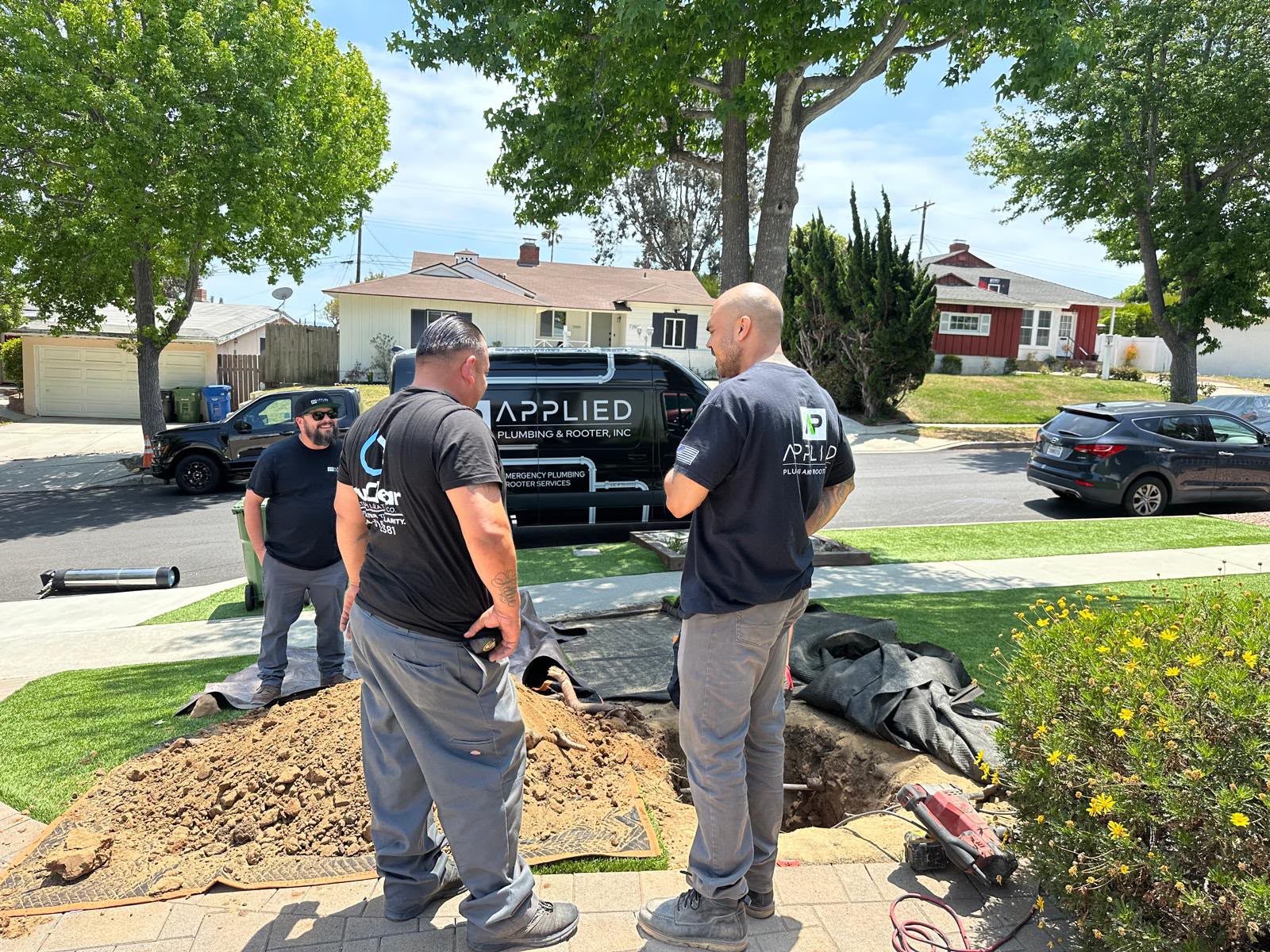
At Applied Plumbing & Rooter, we are full-fix specialists. We don't just guess and start breaking concrete. We use advanced electronic and acoustic leak detection equipment to listen through the slab and pinpoint the exact source of the leak.
Once located, we offer several repair options depending on the condition of your pipes:
- Spot Repair: We open the slab at the exact point of the leak and replace the damaged section of pipe. Best for newer pipes with an isolated issue.
- Line Reroute: We abandon the leaking line under the slab and run a new, durable PEX line through the walls and attic. This avoids breaking concrete and disrupting your flooring.
- Whole-House Repipe: If your copper pipes are failing in multiple places, spot repairs become a waste of money. A whole-house repipe replaces all aging lines, providing a permanent solution.
Frequently Asked Questions
How do I know if I have a slab leak?
Common early signs are an unexplained spike in your water bill, the sound of running water when every fixture is off, warm spots on the floor, dropping water pressure, and damp or cracked flooring. The quickest check is the water meter test: turn off all water and see if the meter still moves.
Can a slab leak fix itself?
No. A slab leak will not heal on its own and typically worsens over time, causing higher water bills and potential damage to flooring and the foundation. Early detection and repair is far less costly than waiting.
How much does slab leak repair cost in Irvine?
Costs vary based on the method. A direct spot repair is generally the most affordable fix, while rerouting a line or performing a whole-house repipe represents a larger investment. We provide a firm, upfront quote after pinpointing the exact leak location.
Is a slab leak covered by homeowners insurance?
It varies by policy. Many homeowners policies help cover the resulting water damage and the cost to access the pipe, but often not the pipe repair itself. Check your specific policy and confirm with your insurer.
Should I repair the slab leak or repipe the whole house?
If your home has older, deteriorating copper pipes and has experienced multiple leaks, a whole-house repipe is often the more cost-effective, long-term solution compared to repeatedly paying for spot repairs and fixing recurring water damage.
Stop bailing water. Start fixing it.
Get the $99 ANY-drain offer while it lasts. Call Orange County's full-fix drain specialists now or text us — we'll handle the rest.