
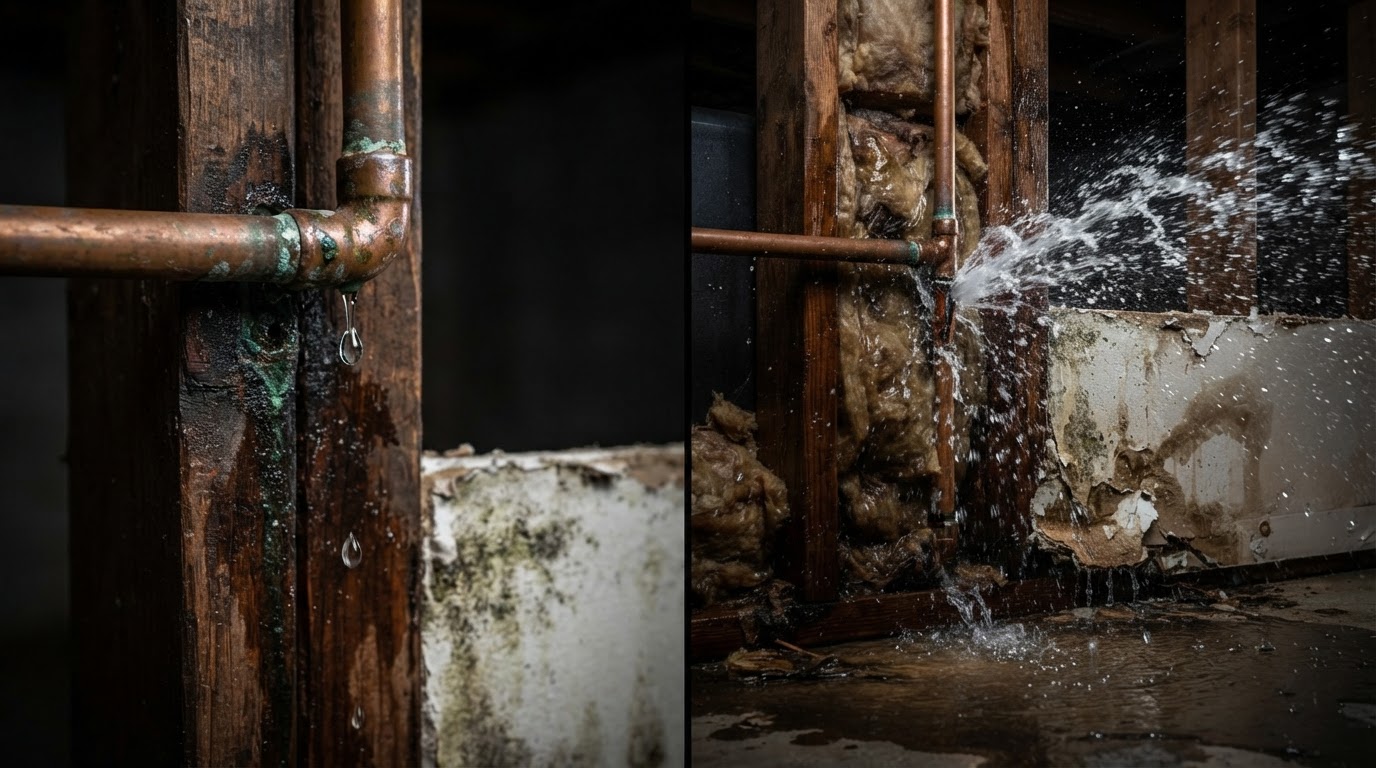
Here's exactly how a "little drip" turns into a big repair, what to watch for, and when it's worth calling a plumber before it gets expensive.
How a Small Leak Becomes a Big Problem
The leak itself doesn't do the damage. Time does.
A pipe joint that drips a few times a minute won't flood your house. But that moisture soaks into wood, drywall, insulation, and subflooring — materials that were never meant to stay wet. Once they're saturated, three things happen, usually in this order:
- Mold starts growing (24–48 hours). According to the EPA, CDC, and IICRC restoration standards, mold can begin developing within one to two days of surfaces staying wet. You won't see it yet — it's growing behind the drywall or under the flooring first.
- Wood swells, warps, and rots (days to weeks). Baseboards buckle. Laminate lifts at the seams. Framing and subfloor lose strength.
- Damage spreads to what's around it (weeks to months). Water travels along studs and joists, so a leak under a bathroom sink can show up as a stain on the ceiling below it — a full room away.
By the time a brown spot appears on your ceiling or you smell that musty odor, the leak has often been working quietly for a while. That's why a slow leak frequently costs more to fix than a dramatic burst pipe — the burst gets your attention immediately; the drip doesn't.
A "Small" Leak Wastes a Shocking Amount of Water
Small doesn't mean harmless on your water bill, either. The EPA's WaterSense program reports that the average household's leaks waste nearly 10,000 gallons of water a year, and easy-to-miss leaks across U.S. homes waste close to 1 trillion gallons annually. A single dripping faucet alone can run through about 3,000 gallons a year.
So if your Irvine water bill crept up and nothing about your usage changed, a hidden leak is one of the first things worth ruling out.
Where Small Leaks Do the Most Damage
Not every leak is equally dangerous. The location matters, because some hide longer and reach more expensive materials.
- •Inside walls (supply lines): Pinhole leaks in copper or a weeping joint can saturate drywall and framing for weeks unseen.
- •Under the slab (slab leaks): A leak in the pipes beneath your foundation can undermine flooring and the slab itself — and these are especially tough to spot. If you want the full rundown, see our guide to slab leak warning signs.
- •Under sinks and behind cabinets: Slow drips rot the cabinet base and subfloor, and the enclosed space is a mold incubator.
- •Around toilets and showers: A failing wax ring-3 or grout line lets water seep into the subfloor, which is why bathroom floors sometimes feel soft or "give" underfoot.
- •Ceilings below bathrooms: Any stain here means water has already traveled through the floor structure above.
Why Irvine Homes Are Especially Prone to Hidden Leaks
A few local factors make small leaks more common — and worth taking seriously — across Irvine and Orange County.
Hard water
Much of Irvine's supply runs hard, often around 16 grains per gallon depending on your source. Over the years, that mineral content builds scale inside pipes and wears on fixtures, water heaters, and valves. Scale buildup and corrosion are a leading cause of the pinhole leaks we find in older copper lines.
High water pressure
California plumbing code requires a pressure-reducing valve when incoming pressure exceeds 80 psi — because pressure above that steadily stresses joints, hoses, and fixture connections. If your home's pressure has crept up or your PRV has failed, small leaks and burst supply lines get a lot more likely.
Home age
Plenty of Orange County homes still have original galvanized or early copper plumbing that's simply reaching the end of its service life.
None of this means your house is doomed — it just means a quick leak inspection is a smart, cheap insurance policy, especially in an older Irvine home.
Warning Signs You May Have a Hidden Leak
Call it in for a look if you notice any of these:
- •A water bill that jumped for no clear reason
- •The sound of running or dripping water when everything's off
- •Musty or "earthy" smells, or visible mold spots
- •Warm spots on the floor (a classic slab-leak clue)
- •Stains, bubbling paint, or sagging on walls or ceilings
- •Flooring that's soft, warped, or lifting
- •Low water pressure that showed up recently
- •Your water meter's leak indicator spinning with all fixtures off
What to Do About a Small Leak
If you can clearly see the source — a loose supply hose, a dripping faucet, a running toilet flapper — that's often a simple DIY fix, and worth doing right away.
But if the leak is hidden, the bill jumped, or you're seeing stains, warm floors, or that musty smell, don't wait it out. The cost gap between catching a leak early and repairing water-damaged framing and mold later is enormous. Repair figures vary widely and always need an on-site inspection to price accurately — but early is always cheaper than late.
Applied Plumbing & Rooter is a licensed, 24/7 plumbing contractor serving Irvine and Orange County. We locate hidden leaks without tearing your home apart, and give you a straight answer on what's actually going on.
Have a leak — or a bill that doesn't add up?
Call now. We serve homeowners throughout Irvine and the surrounding OC cities.
Frequently Asked Questions
Last updated: August 2026